
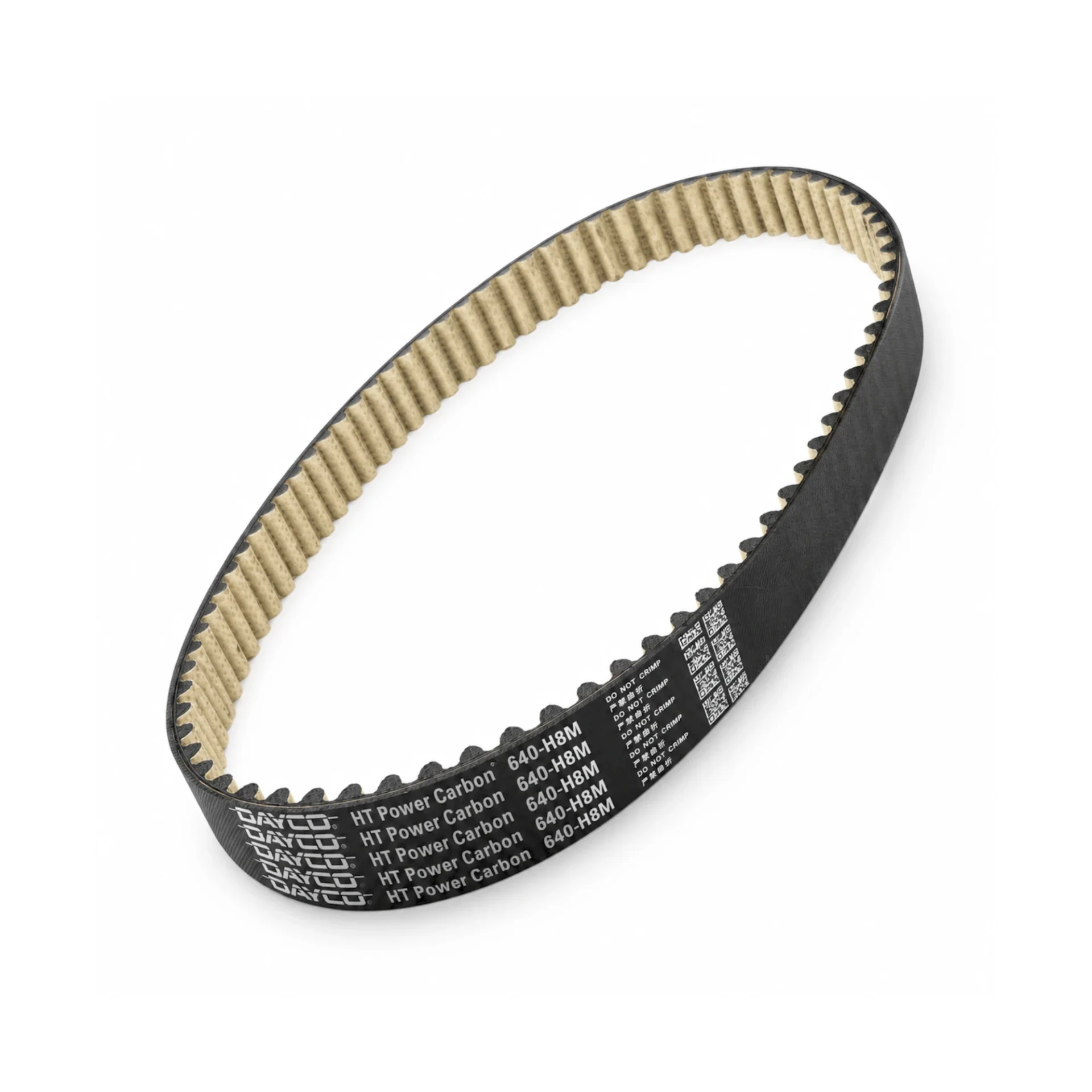
Dayco HT Power Carbon Drive Belt 25mm for Surron Ultra Bee
Original price was: $ 54.00.$ 48.60Current price is: $ 48.60.
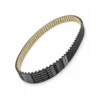
- OEM-grade Dayco HT Power Carbon belt, 25 mm, Surron Ultra Bee fitment
- Glass + carbon fiber cord, HNBR body, PTFE/nylon tooth facing
- Need more strength? EBG Carbon Belt is ~20% stronger in tensile testing
Dayco HT Power Carbon Drive Belt 25mm – Surron Ultra Bee
The Dayco HT Power Carbon belt is the OEM-style toothed carbon drive belt used as factory equipment on the Surron Ultra Bee. It runs between the motor (front) pulley and the rear drive pulley and is a direct replacement for a worn, stretched or debris-damaged stock belt. One belt is included.
Construction
- Tensile cord: hybrid cord of glass and carbon fibers – the carbon fibers are there for mechanical resistance and to keep the belt from stretching under load.
- Body: fiber-loaded HNBR rubber compound, rated for shock loads.
- Tooth facing: PTFE + nylon fabric that reduces friction, noise and tooth wear.
- Temperature range: -22°F to 266°F (-30°C to 130°C).
- Size: 25 mm width, OEM Surron Ultra Bee fitment.
Dayco vs. EBG Carbon Belt – which one should you pick?
The Dayco belt is a solid, proven OEM-grade choice for riders running stock or mildly upgraded power. If you run a high-output controller, a high-power motor swap (e.g. VTB Ryuga 81 kW) or ride hard in mud and sand, our EBG Carbon Belt is the stronger option: in EBG’s internal pull testing, the Dayco belt’s tensile strength is about 20% lower than the EBG Carbon Belt of the same width.
| Dayco HT Power Carbon | EBG Carbon Belt | |
|---|---|---|
| Tensile strength | Baseline (≈20% lower than EBG) | ≈20% higher than Dayco |
| Best for | Stock / mild-upgrade power | High-power builds, up to 40 kW |
| Sizes | 560-8M, 18 mm / 20 mm | 560-8M, 18 mm / 20 mm |
| Price | From $34 | See EBG Carbon Belt |
Compatibility
Surron Ultra Bee – with the stock pulleys or the EBG Ultra Bee Primary Drive Pulley Kit V2.
Installation & maintenance tips
- When the old belt comes off, inspect both pulleys and replace any pulley with damaged or hooked teeth.
- If the old belt drifted to one side or wore on its edges, check the jackshaft axle and bearings and the wheel alignment.
- Check tension about every 300 miles or every 3 months: press on the belt midway between the pulleys – if it moves more than 1/8 in (≈3 mm) up or down, re-tension it.
- After riding in mud or sand, rinse built-up sediment off the belt and pulleys with clean water.
- Replace the belt promptly if a rock or debris has cut or chipped teeth – a damaged belt can fail suddenly.
| Weight | 0.15 kg |
|---|
Only logged in customers who have purchased this product may leave a review.
30-Day Limited Warranty
Eligible EBG-branded products are covered against confirmed manufacturing defects for 30 calendar days from the carrier-recorded delivery date. Product-specific coverage takes precedence.
Shipping Policy
Orders include tracked international shipping. Processing and delivery estimates depend on product availability, destination and the selected service.
What riders say about our belt & pulley kits
17 reviews from riders in Facebook owner groups and Instagram.


Reviews
There are no reviews yet